top of page
  • Almond and Fig
  • Apr 23, 2019
  • 4 min read

Updated: Jun 19, 2020


Freekeh: pronounced free-keh in Arabic فريكه. Freekeh is one of the Middle East's famed ancient grains and staple pantry ingredient. The word "freekeh" comes from the Arabic word "farak" meaning "to rub," which is how farmers stripped away the burnt husk from the green grain before the use of machinery.

Freekeh grain is a young green wheat harvested in the spring time at its green stage, sun dried and flame roasted, then rubbed and cracked. Freekeh has a firm and chewy texture when cooked and has a distinct earthy taste and subtle smokiness from the fire roasting process.

I still recall the large sheets my grandmother designated for drying freekeh. She would buy bushels full of freshly harvested freekeh in the spring and sprinkle it all over the sheets in her veranda to dry out preserving it for the winter months and consumption through out the year. As kids we loved picking at her freekeh. When it’s at its green stage it’s so so good chewy and nutty. Then my grandmother would clean it again from any husks that might of been left behind. After the freekeh dries out my grandmother will reserve some for cracking. A method she did by hand cracking it between two large round stones that she whirled around until she got the consistency she wanted. It was defiantly a time consuming production. Practices like this have been replaced by machinery, although the stones are still at the corner of my grandmothers veranda. You can now find freekeh at most markets. You will often see two kinds of freekeh: whole grain often used for Pilafs and cracked often used in soups and stews.

Freekeh In the Arab world is commonly used in soups with chicken during the winter months and as a stuffing for meat and vegetables also as a pilaf served with nuts.

This dish of stuffed chicken with freekeh is so impressive and often served on weekends or when you are expecting company. It’s served on a large platter garnished with nuts and dried fruits making it a feast for the eyes. You could also use cut up chicken, lamb cutlets, or even stuff a whole leg of lamb.

Dajaj (chicken) mahshi (stuffed) with Freekeh

Freekeh

Serves 6

Let’s Start on the stuffing first:

1 pound freekeh. Picked over, rinsed few times and drained

4 cups chicken or beef stock or water

4 tablespoons olive oil

salt and pepper to taste

1 tsp allspice

1/4 tsp cinnamon

1/4 tsp cardamom

Few grates of fresh nutmeg

1 bay leaf

1 pound ground meat. (beef or lamb) adding minced meat is optional

Directions:

In a heavy pot heat the oil, add the meat and sauté breaking it up with the wooden spoon. About 8-10 minutes until it’s browned. Add the cleaned freekeh, spices, bay leaf, and toss with the meat for 5 minutes until it’s slightly toasted. Add the stock or water and bring the mixture to boil adjusting the seasoning. Reduce the heat to simmer and cook for 40-60 minutes until all the liquid has absorbed and the freekeh is cooked through. The freekeh shouldn’t be crunchy but it needs to hold its shape, it’s naturally chewy and al Dante.

Fluff with a fork. Add the dried fruits and nuts and fluff gently to combine.

Set aside while we prep the chicken.

This recipe will yield to extra freekeh to serve on the side or later you can turn it into a grain bowl or mix leftovers in salads.

Nuts and dried fruits:

1/2 cup assorted dried fruits chopped into bite size pieces (I like to use apricots, figs, and currants or barberries)

1 cup assorted nuts (almonds, cashews, pine nuts, and pistachios are very common)

  • I like to toast the nuts in a dry skillet for a few minutes until they are fragrant and toasted a bit (if they burn they will be bitter) we are looking for a light toasty color.

  • If you are using an assortment of nuts please toast them separately as they have different oil content and cooking times.

  • Set aside to cool

Chicken

One 3-5 pound chicken (pat dry with a paper towel)

3 tbls olive oil plus more for roasting

2 tsp all spice

1/2 tsp nutmeg

1/2 tsp cardamom

1 tsp smoked paprika

1/2 tsp garlic powder

Salt and pepper

1/2 tsp cinnamon

Directions

  • Preheat the oven to 425

  • In a small bowl Mix all the spices and olive oil together

  • Rub the spice mixture all over the chicken and inside the cavity

  • You can prep this step the night before (wrapped in plastic wrap) letting the spices and salt marinate the chicken. If I don’t have time feel i cook the chicken right away it’s not a problem).

  • Spoon the freekeh mixture into the cavity of the chicken. Cross the chicken legs and tie them with a twine.

  • Place the chicken In a roasting pan and drizzle with olive oil all over the top about a tbls per chicken

  • Roast for 20 minutes then reduce the heat to 375 for another 40 -60 minutes or until the chicken is browned and juices run clear.

  • Allow the chicken to rest covered with foil before carving.

  • Serve the stuffing along side a piece of the tender roasted meat

  • This dish is often served with a savory yogurt and a simple cucumber and tomatoes salad.

Recipe notes:

  • You can also use a Hashweh stuffing if you don’t want to use freekeh. Recipe on my blog

  • This method would work to stuff any other cut of meat like a leg of lamb or even vegetables like zucchini, eggplant and tomatoes..

  • Serve any extra freekeh stuffing on the side. Or it’s perfect made into a salad the next day


  • Almond and Fig
  • Apr 20, 2019
  • 2 min read

Updated: Jun 18, 2020


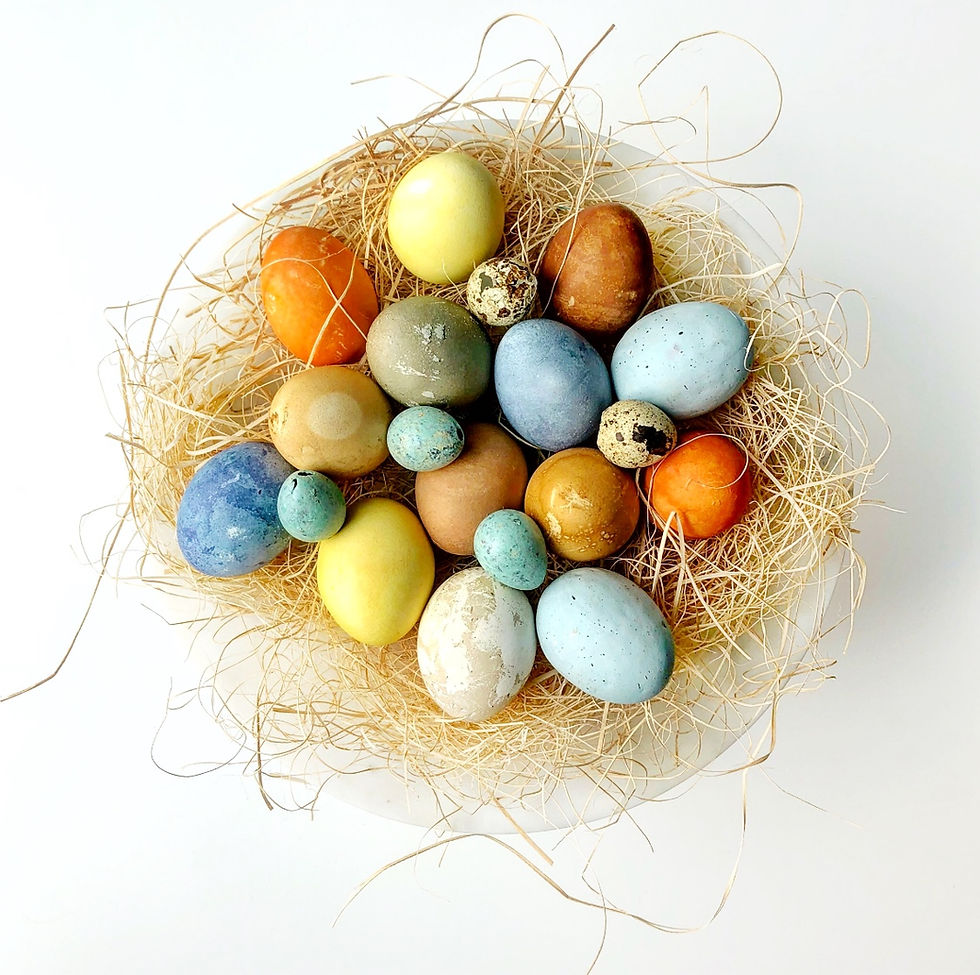
As kids we loved to color Easter eggs. It was always a family activity. My grandmother always loved natural coloring that came straight out of her kitchen. She boiled down onions skin, and beets. But as kids we loved the colorful tablets that dissolved in water and vinegar creating cool colors. And decorating them with all sorts of stickers and sleeves the ones that cling on the egg when you dunk them in boiling water. These were the talk of Easter back then.

Although coloring was fun but we looked forward to all the laughs and smiles it brought us afterwards when we played a game called “Tae’sh” or crack the eggs On Easter morning , a game my kids love to play today.

The dyed eggs will also serve as Easter’s morning breakfast. we all would gather and compete on cracking each other’s eggs we call it “Tae’sh” .

The same dyed eggs are also offered to kids when families and friends come to visit during the Easter celebration which often lasted for a few days. We often challenged one another for an egg Tae’sh throw down. The person with the last unbroken egg is declared the winner. My dad often cheated with fake or wooden eggs.

Natural Easter egg dye Recipe

When you find your Easter egg dye in the produce isle. Because Nature's colors are so beautiful. These dyes are made of vegetables, herbs and spices.

Ingredients

2 Yellow beets

1 Red beet

1 cup Blueberries

Red cabbage and red onion skins

Chili pepper 2 tbls

Turmeric 2 tbls

1 cup Purple yams

Directions

Add the ingredients to 2 cups water, 1 tsp salt let them boil for 15 minutes.

Then add one tbls vinegar.

Let them cool before you add the boiled cooked eggs.

The longer the cooked eggs stay in the colorful bath the deeper the color. Have fun and if you experiment with other veggies, herbs or spices please tag me.

xo,

Mai


  • Almond and Fig
  • Apr 17, 2019
  • 5 min read

Updated: Mar 12, 2021


My grandmothers often prepared the cookies. The cookies are usually made a few days before Easter, then stored in aluminum tins to be served to guests and family on Easter Sunday. Plates full of kaek and mamoul are often exchanged among neighbors and friends each taking pride in the texture, and presentation of their cookies (the ladies secretly judged the cookies lol).

Everyone takes pride in their family recipe. For Christian families the ka'ek and ma'moul cookies are formed into different shapes each shape is symbolic of Christ’s suffering. It’s said that the round ones stuffed with dates they resemble the crown of thorns they placed on Jesus’s head. To be reminded of his sacrifice & crucifixion. The dome like one ones stuffed with walnuts and cinnamon symbolizes the stones that were thrown at Jesus. And the oblong cookies stuffed with an aromatic pistachio paste represent the tomb where Jesus's body was buried after his crucifixion. The cookies are made with fine semolina, and the best sweet butter you can find. They are then stuffed with dates, walnuts or pistachios, flavored with mastic (a sundried resin that exudes from the bark of a Mediterranean tree), and mahlab, (a spice made from the seeds of a species of cherry), orange blossom and rosewater. Each cookie is pinched by hand or by using wooden molds with various shapes. The task of making these cookies is very meticulous and time consuming. It was a job often enjoyed when family and friends or neighbors gathered. Every helper takes so much pride in their decorating skills.

For me today, these delicate fragrant cookies are a passport to my kids to connect with family, culture and tradition. Some things are best left as they are, they tell so many stories for generations to come. As a little girl I sat by my grandmother as she watched and judged carefully my pinching skills.

Be it Easter or Eid, holidays in the Levantine region of the Middle East are incomplete without these delicious buttery cookies. The cookies serve as a perfect treat after a month of fasting during Ramadan or the 40 days of Lent.

Prep time 2 hours

Inactive time: dough resting overnight

Cooking time: 10-15 min per cookie tray

Serving: will vary depending on how big or small you like your cookies or how big or small your molds are. I use a tbls cookie measure and it will yield to a few dozens

Tools

1. Pincher: called malkat in Arabic

Often found at middle eastern markets, often either stainless steel or brass clips

2. Wooden cookie molds also available at middle Eastern stores just ask for mamoul molds

3. Small sieve and powdered sugar for dusting

Dough:

1 pound (16 ounces) fine semolina (smeed na'em)

8 ounces (2 sticks) and a quarter of good quality unsalted butter melted

1/2 tsp mastic pearls crushed with 1/2 tsp of sugar

1/2 tsp ground Mahlab or if using whole crush with 1/2 tsp of sugar

Optional one teaspoon of orange blossom water or rose water

1/2 tsp active dry (instant) yeast

1/4 cup water

1/4 cup milk

Bottom: mastic Top: Mahlab

Fillings: 3 options each filling recipe is enough for one batch of dough. Make less filling and experiment with all the flavors. On Easter families often make one or all three fillings.

Date filling

13 ounces date paste

1 tbls unsalted butter melted

Few grates of fresh nutmeg

1 tsp cinnamon

Walnut filling

1 cup walnuts

2 tbls simple syrup

1 tbls unsweetened coconut

1 tsp cinnamon

Few grates of fresh nutmeg

Pulse your filling in a food processor until it resembles a thick coarse paste

Pistachio filling

1 cup raw unsalted pistachios

2 tbls simple syrup

1 tsp orange blossom water

Pulse your filling in a food processor until it resembles a thick coarse paste

Almond and fig filling

1 cup raw almonds

1 cup dried figs coarsely chopped

1 tsp earl grey tea

2 tbls simple syrup

Soak the chopped figs in water steeped with earl grey. Drain before use

Pulse all Ingredients in the food processor until it resembles a thick coarse paste

To prep the dough:

Day 1

In a large bowl mix together semolina, melted butter, mastic and Mahlab and orange blossom water (if using). Using your hands to combine all the ingredients until it’s well mixed and resembles wet crumbs it will take about 10 minutes. Cover with plastic wrap (so dough doesn’t dry out) and let it sit on the counter overnight.

Day 2

Add the wet ingredients and sprinkle the yeast on the dough. Using your hands mix the dough well to combine. The dough is ready when it holds together when you roll it into a ball and does not crumble. If its still too dry add few drops of water at a time until you get the right consistency.

Make your fillings:

(I am showing you the date filling method here)

Add your water, milk and instant yeast and knead the Dough with your hands for a few more minutes until it holds its shape. You should be able to flatten the dough in your hand and it holds together and doesn’t crumble.

If it’s too dry add a tbls a time of water until the dough comes together.

Using a one tbls cookie scooper measure divide the dough into balls and set aside on a tray. Cover your dough with plastic wrap until ready to use so it doesn't dry out.

Date filling: using the same one tbls measure cookie scooper (don’t over fill it) we want the date paste to be a bit smaller than the dough so it rolls easier. divide the date paste into balls and set aside on a tray and cover with cling wrap until you are ready to use so the dates don’t dry out.

Place the dough in the palm of your hands and flatten it slightly into a disc a bit larger than your date filling. Place a date ball in the middle and wrap the dough around it until you don’t see the date anymore. Roll between the palms of your hands creating a ball. Flatten slightly and using the back of a wooden spoon or your small finger and create a small hole in the middle.

Using the Malkat or the traditional cookie clips to pinch the edges of the dough all around. Making decorative patterns however you wish. Don’t pinch too deep otherwise you will puncture the dough

For the nut fillings:

I like to use the wooden cookie molds:

Dust the mold with flour and tap it down

Add a dough ball in the center and flatten it slightly. Add 1 tsp or your nut filling to the center of the dough. Fold the dough over the center flatten it slightly and tap your mold into the baking sheet. The decorative lines of the mold will shape the cookie. Bake decorative side up.

Preheat the oven to 350

Place the cookies on a parchment lined baking sheet (don’t butter there is plenty of butter in the dough)

Bake the cookies for 10-15 minutes (start checking after the first 10 minutes) or so until they are pale and hold their shape (we are not looking for golden cookies here)

Let them cool completely before you touch them or store them.

Traditionally once cooled the cookies are finished with a dusting of powder sugar right before serving.

Recipe notes:

  • You can use both methods (the pinchers or the molds) with any of the fillings.

  • The molds tend to be a bit faster.

  • Cookies will last in an airtight container for up to two weeks or frozen for up to 3 months.


  • Pinterest Social Icon
  • Facebook Basic Square
  • Twitter Basic Square

© 2018 by Almond & FIG

bottom of page