Palestinian Breakfast/Brunch
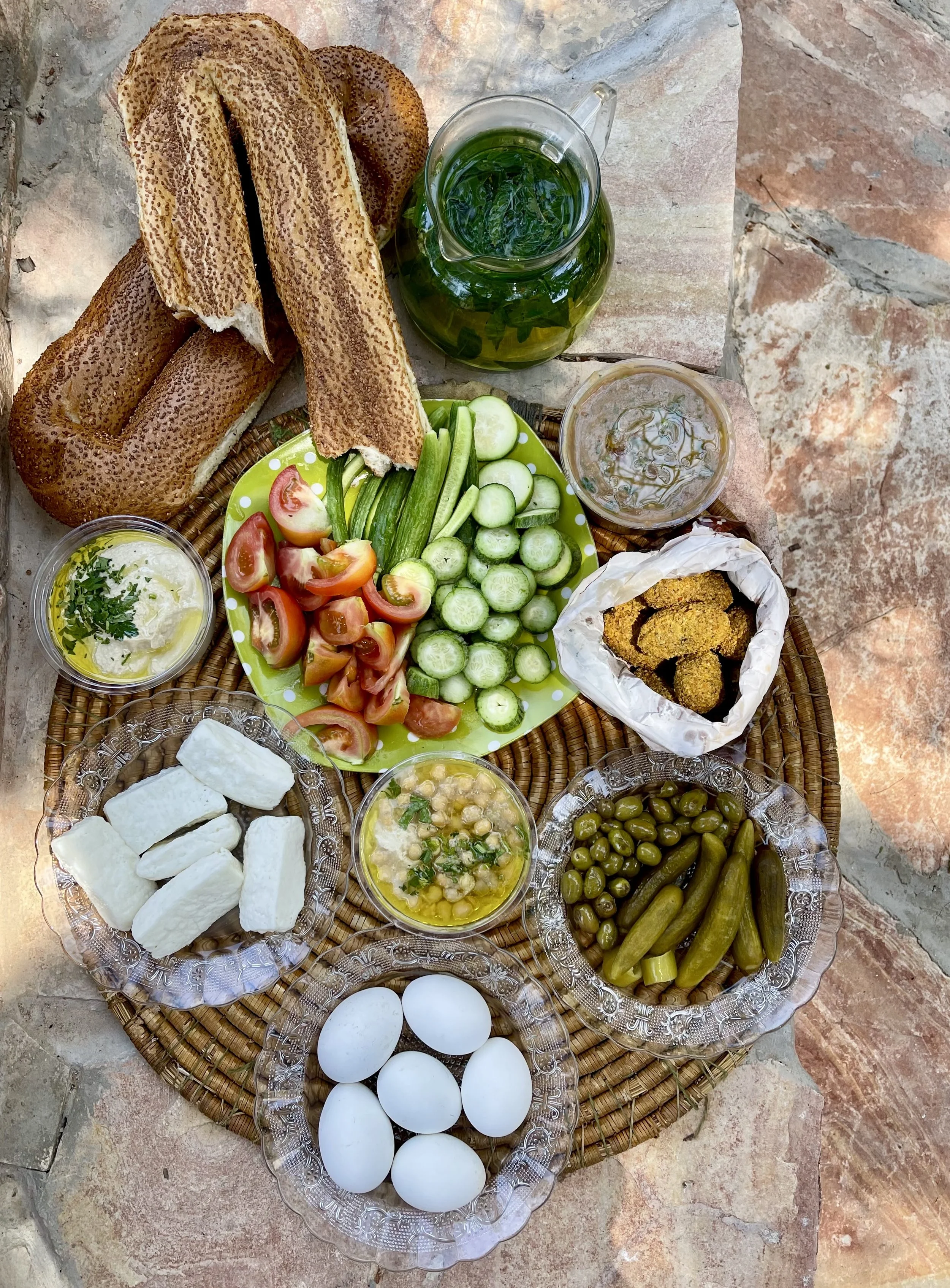
Weekend breakfast in Palestine is elaborate. It is a feast and definitely not something you eat in a rush. It is a time to gather together with the whole family, sharing laughter and memories over food. Palestinian breakfast is mostly savory, loaded with a wide variety of foods with different textures, colors, and flavors. It is a meal filled with goodness and one that truly sets you up for the whole day.
Breakfast is always accompanied by freshness—often with a side of thinly sliced tomatoes and fresh mint. A plate of vegetables like cucumbers, tomatoes, peppers, and herbs is always served. An egg dish is present at the breakfast table in many forms: herb ijeh (a Palestinian frittata), hard-boiled eggs drizzled with olive oil, or my dad’s favorite—fried eggs with sujuk (local Armenian sausage), crisped in golden olive oil and sprinkled with sumac.
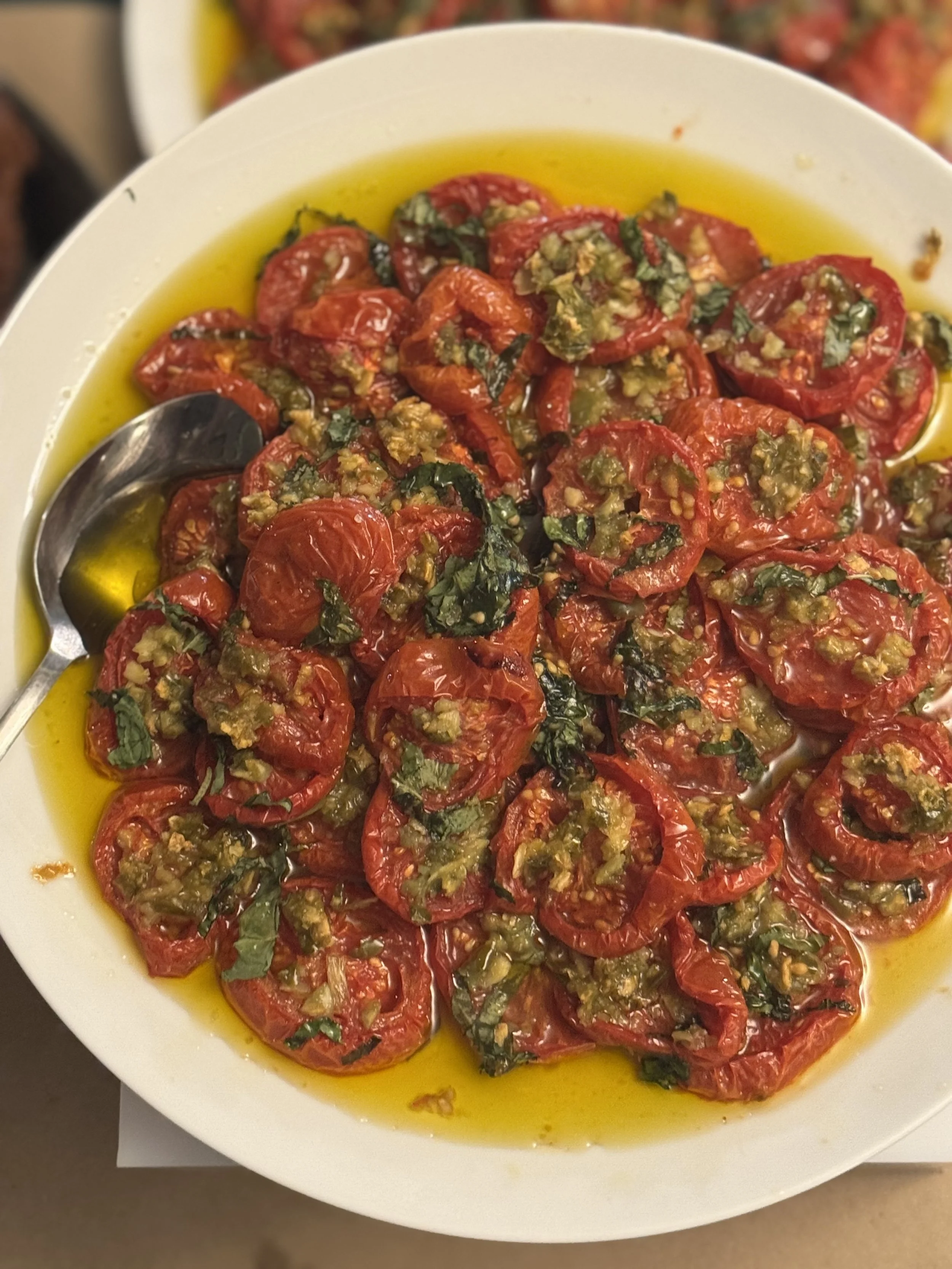
Some dishes are strictly for breakfast, while others can be enjoyed throughout the day, like hummus, falafel, Alayet Bandoura stewed tomatoes in olive oil and labneh. Many of the items served are pantry staples, while others come fresh from the local makhabaz (bakery) or the falafel nook down the street.
My grandmother always served little plates of cut-up halaweh, a tahini sesame confection. She also placed a bowl of grape molasses she made herself, swirled with tahini, on the table. The sweet and nutty mixture is so divine. My grandmother had a sweet tooth for breakfast and often ate slightly boiled Nabulsi cheese alongside tomatoes, jam, and warm bread.
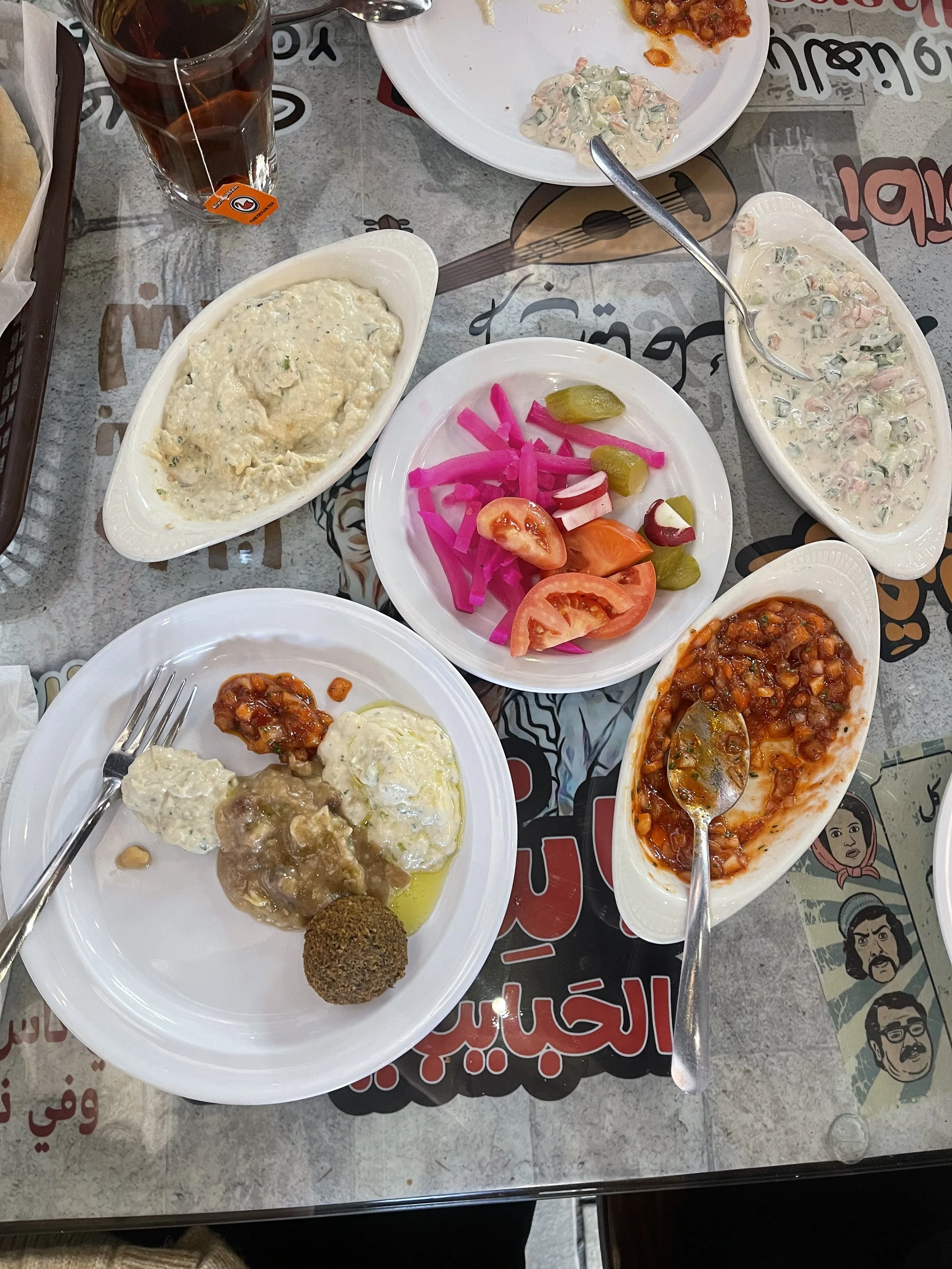
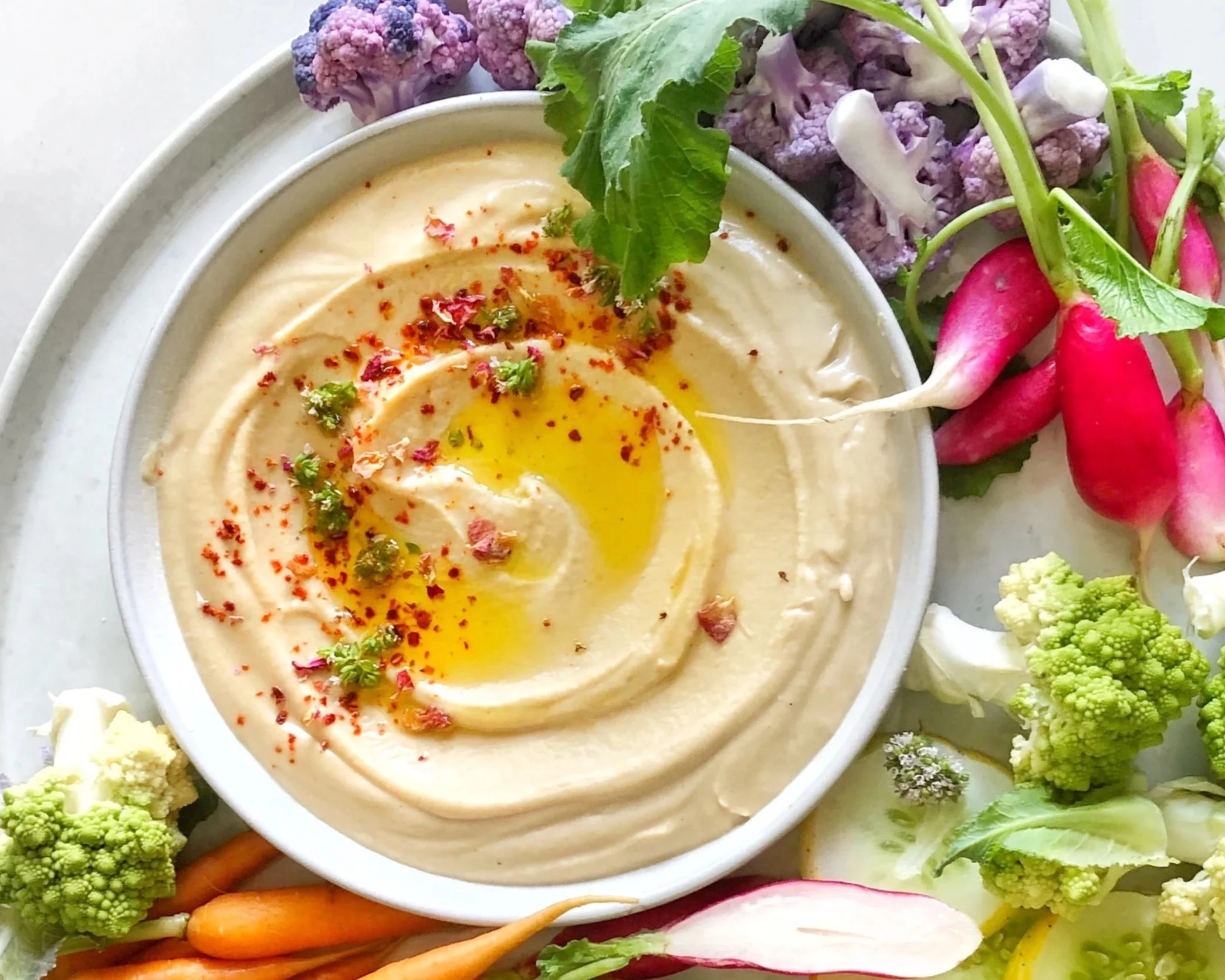
We gather over crispy green falafel dipped in creamy hummus. The hot, crunchy falafel comes from the small shop down the street—every neighborhood has its own favorite falafel spot. In fact, falafel is rarely made at home. We also enjoy foul, a fava bean dish flavored with garlic and lemon juice, one of my absolute favorites.
Taghmees is the way Palestinians love to eat. It translates to “dipping.” Using a piece of bread as a utensil is essential—scooping everything from hummus and labneh to eggs. Bread is an important element of every meal in Palestine. The bread in Palestine is called Kmaj and not pita, it’s picked up daily fresh and hot right of the woodfire oven at local bakeries. Ka’ek al Quds is also part of the Palestinian brunch table often stuffed with smashed eggs, falafel or dipped in hummus or Labaneh and zeit and Za’atar.
An assortment of homemade pickles, olives, and seasonal jams, served with baladi butter (fresh butter), sits alongside plates of hummus and labneh. Two little ceramic bowls—one filled with local zeit (olive oil) and the other with my grandmother’s homemade za’atar—are always within reach and are a breakfast table must. Freshly baked warm bread dipped in olive oil and za’atar is almost like communion and the best way to begin the breakfast spread. Sometimes, za’atar is mixed with a generous amount of olive oil, slathered onto fresh dough, baked until slightly crispy, and served as mana’eesh.
The Palestinian brunch table is meant to be savored and enjoyed slowly, very much like a mezze spread. The family gathers around a long table filled with small plates of deliciousness. Coffee is never part of the picture. Mint tea is served in the summer, and sage tea is served in the winter.
Although I am far from Palestine in distance, I still try to recreate these dishes. Nostalgia runs deep as I make and enjoy Palestinian breakfast on the weekends with my family. I hope you enjoy this collection of breakfast and brunch recipes, in hopes that it transports you—allowing you to experience a glimpse and a taste of Palestine.